William Howard Taft
In this biographical study of the only American ever to have been both President and Chief Justice of the United States, Jonathan Lurie reassesses William Howard Taft's multiple careers, which culminated in Taft's election to the presidency in 1908 as the chosen successor to Theodore Roosevelt. By 1912, however, the relationship between Taft and Roosevelt had ruptured. Lurie re-examines the Taft–Roosevelt friendship and concludes that it rested on flimsy ground. He also places Taft in a progressive context, taking Taft's own self-description as 'a believer in progressive conservatism' as the starting point. At the end of his biography, Lurie concludes that this label is accurate when applied to Taft.
Product Information
Product Information
Shipping & Returns
Shipping & Returns
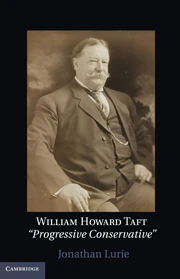
William Howard Taft
William Howard Taft
In this biographical study of the only American ever to have been both President and Chief Justice of the United States, Jonathan Lurie reassesses William Howard Taft's multiple careers, which culminated in Taft's election to the presidency in 1908 as the chosen successor to Theodore Roosevelt. By 1912, however, the relationship between Taft and Roosevelt had ruptured. Lurie re-examines the Taft–Roosevelt friendship and concludes that it rested on flimsy ground. He also places Taft in a progressive context, taking Taft's own self-description as 'a believer in progressive conservatism' as the starting point. At the end of his biography, Lurie concludes that this label is accurate when applied to Taft.
Product Information
Product Information
Shipping & Returns
Shipping & Returns
Description
In this biographical study of the only American ever to have been both President and Chief Justice of the United States, Jonathan Lurie reassesses William Howard Taft's multiple careers, which culminated in Taft's election to the presidency in 1908 as the chosen successor to Theodore Roosevelt. By 1912, however, the relationship between Taft and Roosevelt had ruptured. Lurie re-examines the Taft–Roosevelt friendship and concludes that it rested on flimsy ground. He also places Taft in a progressive context, taking Taft's own self-description as 'a believer in progressive conservatism' as the starting point. At the end of his biography, Lurie concludes that this label is accurate when applied to Taft.