Time's Arrows and Quantum Measurement
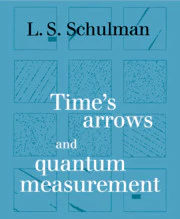
This book is an introduction to the arrow of time in thermodynamics and cosmology, and develops a new quantum measurement theory in which the foregoing concepts play an essential role. The first chapter is an overview and 'route map' and is followed by an exposition of irreversibility, the expansion of the Universe and other arrows of time. The author examines the thesis that the thermodynamic arrow follows the cosmological one, and in doing so extends traditional statistical mechanics. The second part of the book presents a new theory of quantum measurement and possible experimental tests. This theory incorporates the extended statistical mechanics in an essential way. The last chapter discusses open experimental and theoretical issues. Written in a lively and accessible style, the text is liberally sprinkled with exercises. Each chapter ends with a resources section that includes notes, further reading, and technical appendices.
Product Information
Product Information
Shipping & Returns
Shipping & Returns
Time's Arrows and Quantum Measurement
Time's Arrows and Quantum Measurement
This book is an introduction to the arrow of time in thermodynamics and cosmology, and develops a new quantum measurement theory in which the foregoing concepts play an essential role. The first chapter is an overview and 'route map' and is followed by an exposition of irreversibility, the expansion of the Universe and other arrows of time. The author examines the thesis that the thermodynamic arrow follows the cosmological one, and in doing so extends traditional statistical mechanics. The second part of the book presents a new theory of quantum measurement and possible experimental tests. This theory incorporates the extended statistical mechanics in an essential way. The last chapter discusses open experimental and theoretical issues. Written in a lively and accessible style, the text is liberally sprinkled with exercises. Each chapter ends with a resources section that includes notes, further reading, and technical appendices.
Original: $213.26
-70%$213.26
$63.98Product Information
Product Information
Shipping & Returns
Shipping & Returns
Description
This book is an introduction to the arrow of time in thermodynamics and cosmology, and develops a new quantum measurement theory in which the foregoing concepts play an essential role. The first chapter is an overview and 'route map' and is followed by an exposition of irreversibility, the expansion of the Universe and other arrows of time. The author examines the thesis that the thermodynamic arrow follows the cosmological one, and in doing so extends traditional statistical mechanics. The second part of the book presents a new theory of quantum measurement and possible experimental tests. This theory incorporates the extended statistical mechanics in an essential way. The last chapter discusses open experimental and theoretical issues. Written in a lively and accessible style, the text is liberally sprinkled with exercises. Each chapter ends with a resources section that includes notes, further reading, and technical appendices.