The Political Economy of American Monetary Policy
This collection of essays examines the institutional framework in which monetary policy is made. The essays consider two questions: how free is the Fed to set monetary policy and to what extent do organisational problems affect the choice of that monetary policy? Topics covered include the Fed's response to movements on its goals, Congressional and presidential pressures on the Fed, the existence of political business cycles operating through monetary policy, and the extent to which monetary policy may be explained by the Fed's own interests. A final section examines the claim that the Federal Reserve follows counter-cyclical policy and evaluates its performance as a lender to banks both in normal times and as a lender of last resort.
Product Information
Product Information
Shipping & Returns
Shipping & Returns
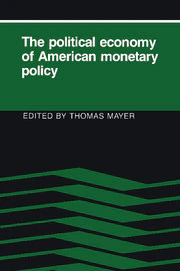
The Political Economy of American Monetary Policy
The Political Economy of American Monetary Policy
This collection of essays examines the institutional framework in which monetary policy is made. The essays consider two questions: how free is the Fed to set monetary policy and to what extent do organisational problems affect the choice of that monetary policy? Topics covered include the Fed's response to movements on its goals, Congressional and presidential pressures on the Fed, the existence of political business cycles operating through monetary policy, and the extent to which monetary policy may be explained by the Fed's own interests. A final section examines the claim that the Federal Reserve follows counter-cyclical policy and evaluates its performance as a lender to banks both in normal times and as a lender of last resort.
Original: $53.96
-70%$53.96
$16.19Product Information
Product Information
Shipping & Returns
Shipping & Returns
Description
This collection of essays examines the institutional framework in which monetary policy is made. The essays consider two questions: how free is the Fed to set monetary policy and to what extent do organisational problems affect the choice of that monetary policy? Topics covered include the Fed's response to movements on its goals, Congressional and presidential pressures on the Fed, the existence of political business cycles operating through monetary policy, and the extent to which monetary policy may be explained by the Fed's own interests. A final section examines the claim that the Federal Reserve follows counter-cyclical policy and evaluates its performance as a lender to banks both in normal times and as a lender of last resort.