The Nation's Image
French grand opera, this book argues, was a different and more complex kind of theater than we ordinarily suppose. Focusing on the period of grand opera's rise, its dominance, and its final decline, Professor Fulcher shows that it was a subtly used tool of the state. Using the Opera's archives, she analyses the mechanism and goals of state intervention in the theatre and how these underwent subtle change. As she demonstrates, the official framework helped to shape not only the nature of artistic development, but also politicized the theatrical experience itself. Although concerned with the audience's understanding of the operas, this book is not narrowly a 'reception history'. Rather, it is an attempt to see the part played by grand opera in a specific social and cultural context - how it arose within larger structures and in turn reacted back finally upon them.
Product Information
Product Information
Shipping & Returns
Shipping & Returns
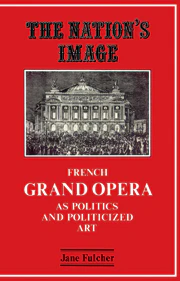
The Nation's Image
The Nation's Image
French grand opera, this book argues, was a different and more complex kind of theater than we ordinarily suppose. Focusing on the period of grand opera's rise, its dominance, and its final decline, Professor Fulcher shows that it was a subtly used tool of the state. Using the Opera's archives, she analyses the mechanism and goals of state intervention in the theatre and how these underwent subtle change. As she demonstrates, the official framework helped to shape not only the nature of artistic development, but also politicized the theatrical experience itself. Although concerned with the audience's understanding of the operas, this book is not narrowly a 'reception history'. Rather, it is an attempt to see the part played by grand opera in a specific social and cultural context - how it arose within larger structures and in turn reacted back finally upon them.
Product Information
Product Information
Shipping & Returns
Shipping & Returns
Description
French grand opera, this book argues, was a different and more complex kind of theater than we ordinarily suppose. Focusing on the period of grand opera's rise, its dominance, and its final decline, Professor Fulcher shows that it was a subtly used tool of the state. Using the Opera's archives, she analyses the mechanism and goals of state intervention in the theatre and how these underwent subtle change. As she demonstrates, the official framework helped to shape not only the nature of artistic development, but also politicized the theatrical experience itself. Although concerned with the audience's understanding of the operas, this book is not narrowly a 'reception history'. Rather, it is an attempt to see the part played by grand opera in a specific social and cultural context - how it arose within larger structures and in turn reacted back finally upon them.