Psychiatrists' Analysis of Politician's Mental Health
This book discusses the validity, ethics, and usefulness of professional public commentary of politician’s mental health and provides an alternative model for professionals to do so in an ethical manner.
Rendering public opinions about politician’s mental health, particularly when the professional has not conducted a first-hand assessment of the individual, can be problematic and unethical. This book reviews the legitimate methods of psychiatric and psychological evaluations, abuses of psychiatry, ethical perspectives on publicly voicing opinions regarding public figures, and proposes an alternative assumption model for mental health professionals to render a public opinion. It is a great resource for practicing psychologists and psychiatrists to reflect on their own processes when examining the mental health of politicians.
Students and trainees in the mental health sector will come away from the book with a better understanding of the ethical concerns inherent in commenting publicly on public officials’ mental health, and they'll find valuable guidance on how to do so in an ethical way.
Product Information
Product Information
Shipping & Returns
Shipping & Returns
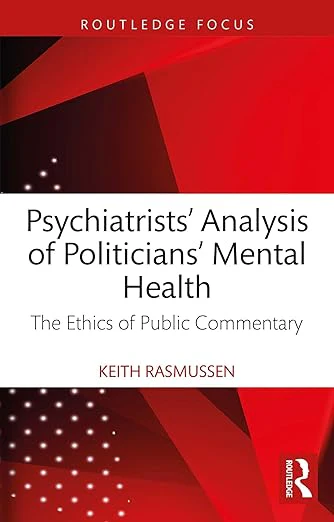
Psychiatrists' Analysis of Politician's Mental Health
Psychiatrists' Analysis of Politician's Mental Health
This book discusses the validity, ethics, and usefulness of professional public commentary of politician’s mental health and provides an alternative model for professionals to do so in an ethical manner.
Rendering public opinions about politician’s mental health, particularly when the professional has not conducted a first-hand assessment of the individual, can be problematic and unethical. This book reviews the legitimate methods of psychiatric and psychological evaluations, abuses of psychiatry, ethical perspectives on publicly voicing opinions regarding public figures, and proposes an alternative assumption model for mental health professionals to render a public opinion. It is a great resource for practicing psychologists and psychiatrists to reflect on their own processes when examining the mental health of politicians.
Students and trainees in the mental health sector will come away from the book with a better understanding of the ethical concerns inherent in commenting publicly on public officials’ mental health, and they'll find valuable guidance on how to do so in an ethical way.
Original: $99.00
-70%$99.00
$29.70Product Information
Product Information
Shipping & Returns
Shipping & Returns
Description
This book discusses the validity, ethics, and usefulness of professional public commentary of politician’s mental health and provides an alternative model for professionals to do so in an ethical manner.
Rendering public opinions about politician’s mental health, particularly when the professional has not conducted a first-hand assessment of the individual, can be problematic and unethical. This book reviews the legitimate methods of psychiatric and psychological evaluations, abuses of psychiatry, ethical perspectives on publicly voicing opinions regarding public figures, and proposes an alternative assumption model for mental health professionals to render a public opinion. It is a great resource for practicing psychologists and psychiatrists to reflect on their own processes when examining the mental health of politicians.
Students and trainees in the mental health sector will come away from the book with a better understanding of the ethical concerns inherent in commenting publicly on public officials’ mental health, and they'll find valuable guidance on how to do so in an ethical way.