Naukar, Rajput, and Sepoy
This is a study of an aspect of the ethnohistory of North Indian peasant society: the importance of its military labour market for state and sect formation, for social change as well as for the energetic survival strategies of the villages of Hindustan. It traces the history of the British Indian sepoy to at least as far back as the fifteenth century, firmly rooting him in India's medieval past. It also shows that, from the anthropological point of view, not the hierarchically arranged castes, but the multiple alliances and fluid identities of the peasantry were the central phenomena of North Indian politics and decision making.
Product Information
Product Information
Shipping & Returns
Shipping & Returns
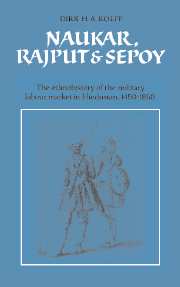
Naukar, Rajput, and Sepoy
Naukar, Rajput, and Sepoy
This is a study of an aspect of the ethnohistory of North Indian peasant society: the importance of its military labour market for state and sect formation, for social change as well as for the energetic survival strategies of the villages of Hindustan. It traces the history of the British Indian sepoy to at least as far back as the fifteenth century, firmly rooting him in India's medieval past. It also shows that, from the anthropological point of view, not the hierarchically arranged castes, but the multiple alliances and fluid identities of the peasantry were the central phenomena of North Indian politics and decision making.
Original: $160.16
-70%$160.16
$48.05Product Information
Product Information
Shipping & Returns
Shipping & Returns
Description
This is a study of an aspect of the ethnohistory of North Indian peasant society: the importance of its military labour market for state and sect formation, for social change as well as for the energetic survival strategies of the villages of Hindustan. It traces the history of the British Indian sepoy to at least as far back as the fifteenth century, firmly rooting him in India's medieval past. It also shows that, from the anthropological point of view, not the hierarchically arranged castes, but the multiple alliances and fluid identities of the peasantry were the central phenomena of North Indian politics and decision making.