Gas Pipelines and the Emergence of America's Regulatory State
The study of Panhandle Eastern's history shows the relationship between regulatory policy and the modern corporation in the twentieth century from a unique perspective, for it extends over three eras in the growth of its industry and the US political economy. The first era, in which the interstate pipeline industry began, was characterised by minimal regulation or antitrust activity. Then, New Deal regulatory reforms subjected the firms to single industry regulation, but pipelines bought and sold gas and enjoyed a long period of expansion in spite of the increasingly complex regulations. Finally, the third era was characterised by regulatory failure, energy crises, regulatory change, and industry reorganisation as regulators took the traditional merchant function, that of buying and selling gas, from pipelines and transformed them into open access contract carriers.
Product Information
Product Information
Shipping & Returns
Shipping & Returns
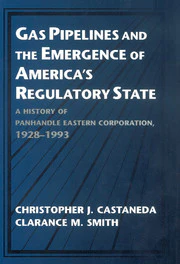
Gas Pipelines and the Emergence of America's Regulatory State
Gas Pipelines and the Emergence of America's Regulatory State
The study of Panhandle Eastern's history shows the relationship between regulatory policy and the modern corporation in the twentieth century from a unique perspective, for it extends over three eras in the growth of its industry and the US political economy. The first era, in which the interstate pipeline industry began, was characterised by minimal regulation or antitrust activity. Then, New Deal regulatory reforms subjected the firms to single industry regulation, but pipelines bought and sold gas and enjoyed a long period of expansion in spite of the increasingly complex regulations. Finally, the third era was characterised by regulatory failure, energy crises, regulatory change, and industry reorganisation as regulators took the traditional merchant function, that of buying and selling gas, from pipelines and transformed them into open access contract carriers.
Original: $167.36
-70%$167.36
$50.21Product Information
Product Information
Shipping & Returns
Shipping & Returns
Description
The study of Panhandle Eastern's history shows the relationship between regulatory policy and the modern corporation in the twentieth century from a unique perspective, for it extends over three eras in the growth of its industry and the US political economy. The first era, in which the interstate pipeline industry began, was characterised by minimal regulation or antitrust activity. Then, New Deal regulatory reforms subjected the firms to single industry regulation, but pipelines bought and sold gas and enjoyed a long period of expansion in spite of the increasingly complex regulations. Finally, the third era was characterised by regulatory failure, energy crises, regulatory change, and industry reorganisation as regulators took the traditional merchant function, that of buying and selling gas, from pipelines and transformed them into open access contract carriers.