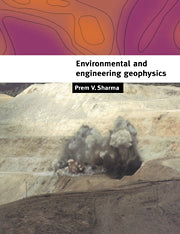
Environmental and Engineering Geophysics
Geophysical imaging methods provide solutions to a wide range of environmental and engineering problems: protection of soil and groundwater from contamination, disposal of chemical and nuclear waste, geotechnical site testing, landslide and ground subsidence hazard detection, location of archaeological artefacts. This book comprehensively describes the theory, data acquisition and interpretation of all of the principal techniques of geophysical surveying: gravity, magnetic, seismic, self-potential, resistivity, induced polarization, electromagnetic, ground-probing radar, radioactivity, geothermal, and geophysical borehole logging. A final chapter is devoted to inversion theory and tomography. Each chapter is supported by a large number of richly illustrated case histories. This book will prove to be a valuable course-book for advanced undergraduates and postgraduates in environmental and applied geophysics, a supplementary course-book for students of geology, engineering geophysics, civil and mining engineering, and a reference work for professional earth scientists, engineers and town planners.
Product Information
Product Information
Shipping & Returns
Shipping & Returns
Environmental and Engineering Geophysics
Environmental and Engineering Geophysics
Geophysical imaging methods provide solutions to a wide range of environmental and engineering problems: protection of soil and groundwater from contamination, disposal of chemical and nuclear waste, geotechnical site testing, landslide and ground subsidence hazard detection, location of archaeological artefacts. This book comprehensively describes the theory, data acquisition and interpretation of all of the principal techniques of geophysical surveying: gravity, magnetic, seismic, self-potential, resistivity, induced polarization, electromagnetic, ground-probing radar, radioactivity, geothermal, and geophysical borehole logging. A final chapter is devoted to inversion theory and tomography. Each chapter is supported by a large number of richly illustrated case histories. This book will prove to be a valuable course-book for advanced undergraduates and postgraduates in environmental and applied geophysics, a supplementary course-book for students of geology, engineering geophysics, civil and mining engineering, and a reference work for professional earth scientists, engineers and town planners.
Original: $125.96
-70%$125.96
$37.79Product Information
Product Information
Shipping & Returns
Shipping & Returns
Description
Geophysical imaging methods provide solutions to a wide range of environmental and engineering problems: protection of soil and groundwater from contamination, disposal of chemical and nuclear waste, geotechnical site testing, landslide and ground subsidence hazard detection, location of archaeological artefacts. This book comprehensively describes the theory, data acquisition and interpretation of all of the principal techniques of geophysical surveying: gravity, magnetic, seismic, self-potential, resistivity, induced polarization, electromagnetic, ground-probing radar, radioactivity, geothermal, and geophysical borehole logging. A final chapter is devoted to inversion theory and tomography. Each chapter is supported by a large number of richly illustrated case histories. This book will prove to be a valuable course-book for advanced undergraduates and postgraduates in environmental and applied geophysics, a supplementary course-book for students of geology, engineering geophysics, civil and mining engineering, and a reference work for professional earth scientists, engineers and town planners.