Dispersal Ecology
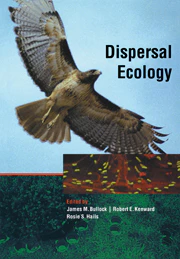
Dispersal has become central to many questions in theoretical and applied ecology in recent years. This has come about through advances in measurement and modelling of dispersal, combined with the key role of spatial processes in current environmental problems. This volume, written by a team of leading ecologists, aims to provide both the advanced student and researcher with a comprehensive review of dispersal and its implications for modern ecology. It presents a broad overview considering plants, invertebrates, vertebrates and microorganisms in both terrestrial and aquatic environments. Up-to-date methods for measuring dispersal are assessed. The importance of dispersal in ecological theory is addressed in chapters on life history evolution, ecological genetics, population and metapopulation dynamics, invasions, landscape ecology and biogeography. Applied questions on topics such as spread of non-native species, effect of habitat fragmentation, species reintroductions, disease epidemiology, responses to climate change and impacts of genetically modified organisms are also considered.
Product Information
Product Information
Shipping & Returns
Shipping & Returns
Dispersal Ecology
Dispersal Ecology
Dispersal has become central to many questions in theoretical and applied ecology in recent years. This has come about through advances in measurement and modelling of dispersal, combined with the key role of spatial processes in current environmental problems. This volume, written by a team of leading ecologists, aims to provide both the advanced student and researcher with a comprehensive review of dispersal and its implications for modern ecology. It presents a broad overview considering plants, invertebrates, vertebrates and microorganisms in both terrestrial and aquatic environments. Up-to-date methods for measuring dispersal are assessed. The importance of dispersal in ecological theory is addressed in chapters on life history evolution, ecological genetics, population and metapopulation dynamics, invasions, landscape ecology and biogeography. Applied questions on topics such as spread of non-native species, effect of habitat fragmentation, species reintroductions, disease epidemiology, responses to climate change and impacts of genetically modified organisms are also considered.
Original: $106.16
-70%$106.16
$31.85Product Information
Product Information
Shipping & Returns
Shipping & Returns
Description
Dispersal has become central to many questions in theoretical and applied ecology in recent years. This has come about through advances in measurement and modelling of dispersal, combined with the key role of spatial processes in current environmental problems. This volume, written by a team of leading ecologists, aims to provide both the advanced student and researcher with a comprehensive review of dispersal and its implications for modern ecology. It presents a broad overview considering plants, invertebrates, vertebrates and microorganisms in both terrestrial and aquatic environments. Up-to-date methods for measuring dispersal are assessed. The importance of dispersal in ecological theory is addressed in chapters on life history evolution, ecological genetics, population and metapopulation dynamics, invasions, landscape ecology and biogeography. Applied questions on topics such as spread of non-native species, effect of habitat fragmentation, species reintroductions, disease epidemiology, responses to climate change and impacts of genetically modified organisms are also considered.